 PitchGarden · for iPhone
Tune up, then train your ear
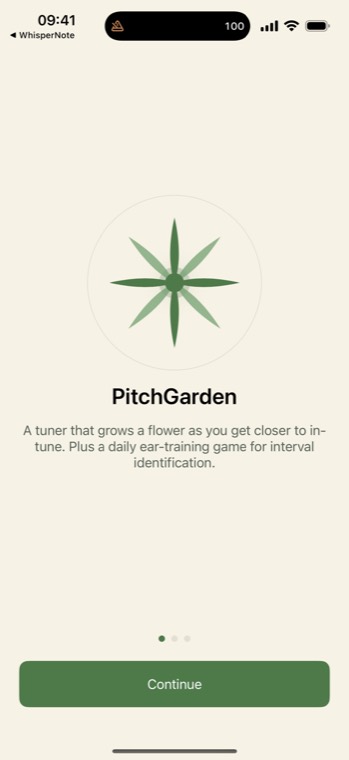
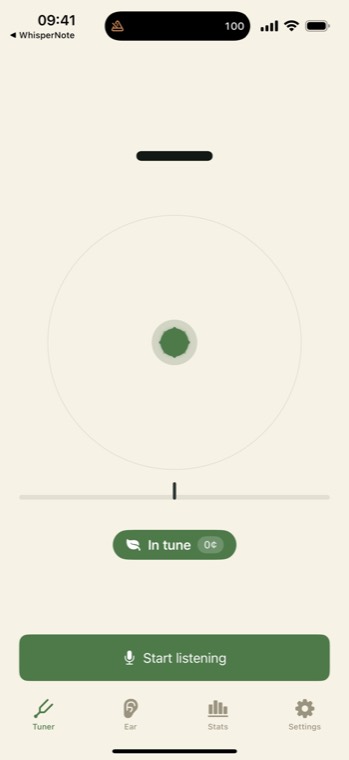
Play a note and a small flower opens its petals — the closer you are to in tune, the wider the bloom — with a precise cents readout underneath. Then five minutes of interval training, every day.
Two things, every day
- TuneA chromatic tuner for any instrument. Reference pitch A4 is adjustable from 430 to 450 Hz.
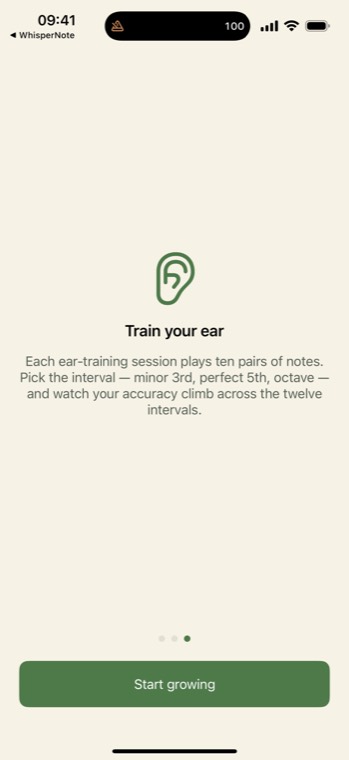
- Train your earEach session plays ten pairs of notes; name the interval. Choose which intervals — a minor third, a perfect fifth, an octave, or all twelve.
- Learn from the missesA wrong answer comes with a reminder — "that was a perfect fifth: Twinkle, Twinkle" — and your accuracy is kept per interval.
What it looks like
Cents, and what "in tune" means
A semitone is divided into 100 cents. A tuner's needle — or here, the flower — shows how many cents sharp or flat the note is. A few cents off is inaudible to most listeners in isolation; ten or more starts to beat against other instruments.
Orchestras and bands do not all tune to the same A. 440 Hz is the common reference, but ensembles tune a little higher or lower, which is why the reference is adjustable.
Honest about the limits
- Quiet rooms tune best. Background noise and other instruments confuse any microphone tuner.
- Listening only while you tune. Audio is analysed on the iPhone and never recorded.
- No account. Your practice log stays on your iPhone.
Last reviewed 22 September 2026